
 By I LOVE GLAMOUR
VERDICT BREAKDOWN
✦ FINAL VERDICT
“Approved. He went back to the beginning and found something the house had been trying to say for a hundred years. The woman wearing these clothes is not performing Chanel. She is living in it.”
The choice of Biarritz was not sentimental. I want to say that first because a lot of coverage has framed it that way — as a romantic gesture, a postcard from the archive. That reading is too soft. Matthieu Blazy went to Biarritz because Biarritz is the argument. It is where Gabrielle Chanel first understood that the most powerful thing a garment could do was free the body wearing it. Not decorate it. Not signal its owner’s wealth. Free it. Every decision in this collection flows from that one idea, and that is not nostalgia. That is a manifesto.
The opening look stopped me. A reworked version of the 1926 little black dress — the one Chanel made when black was the colour of servants, of shopgirls, of women who worked. She put it on aristocrats and told them it was fashion. Blazy called it the original revenge dress. He is right. And the fact that he opened with it, that he chose to start his first Cruise collection at the origin point of the whole Chanel idea, tells you exactly how he thinks. He is not decorating a house. He is reading it.
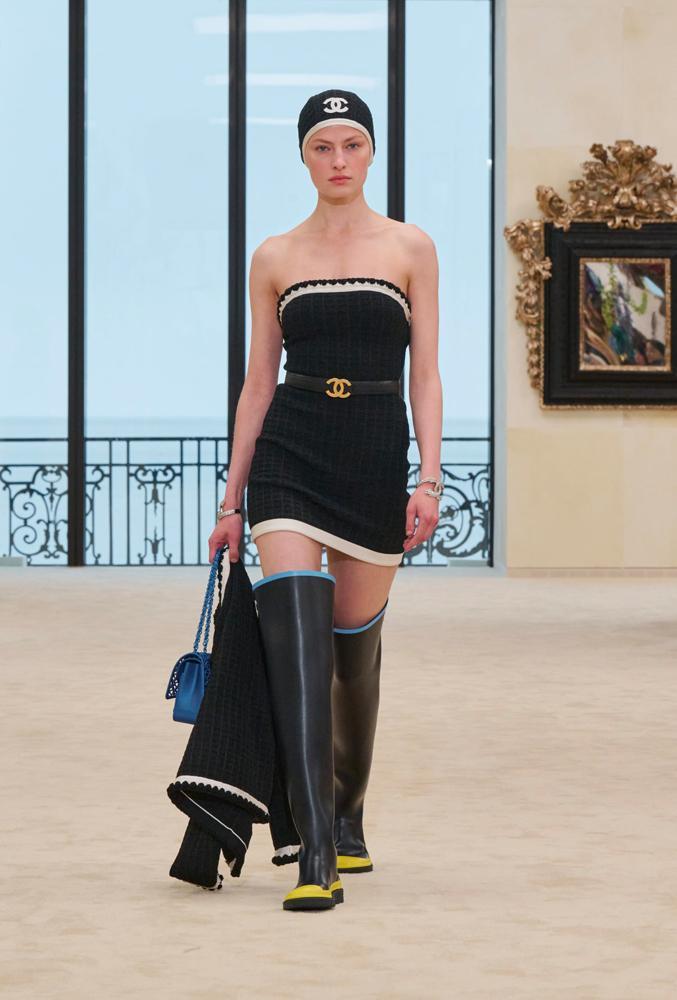
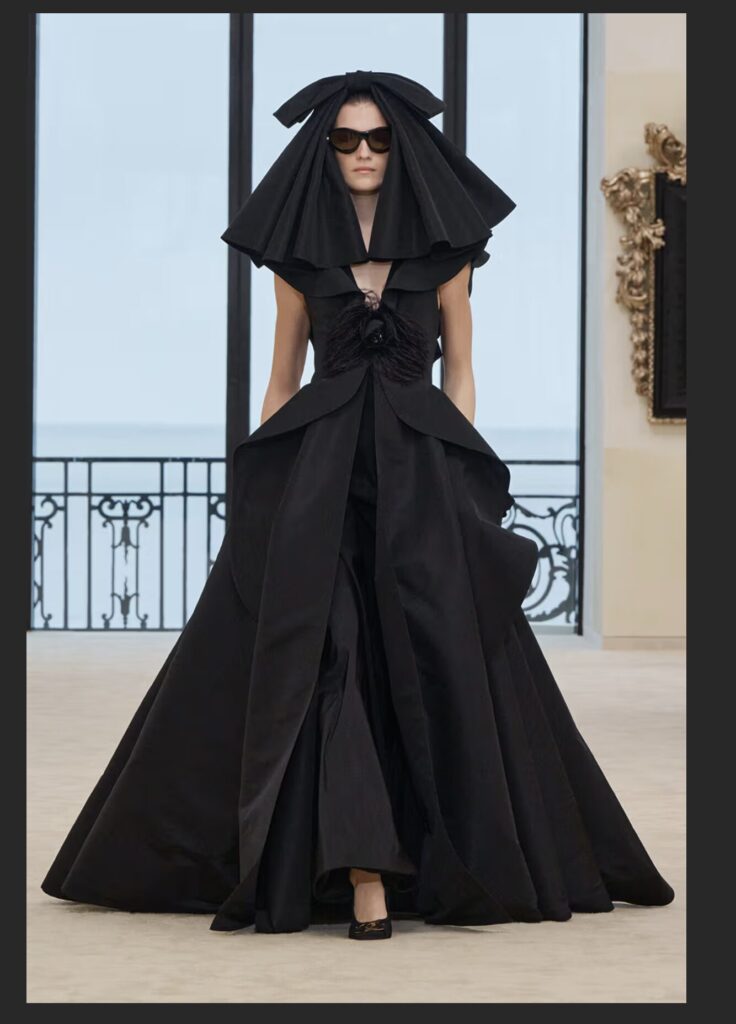
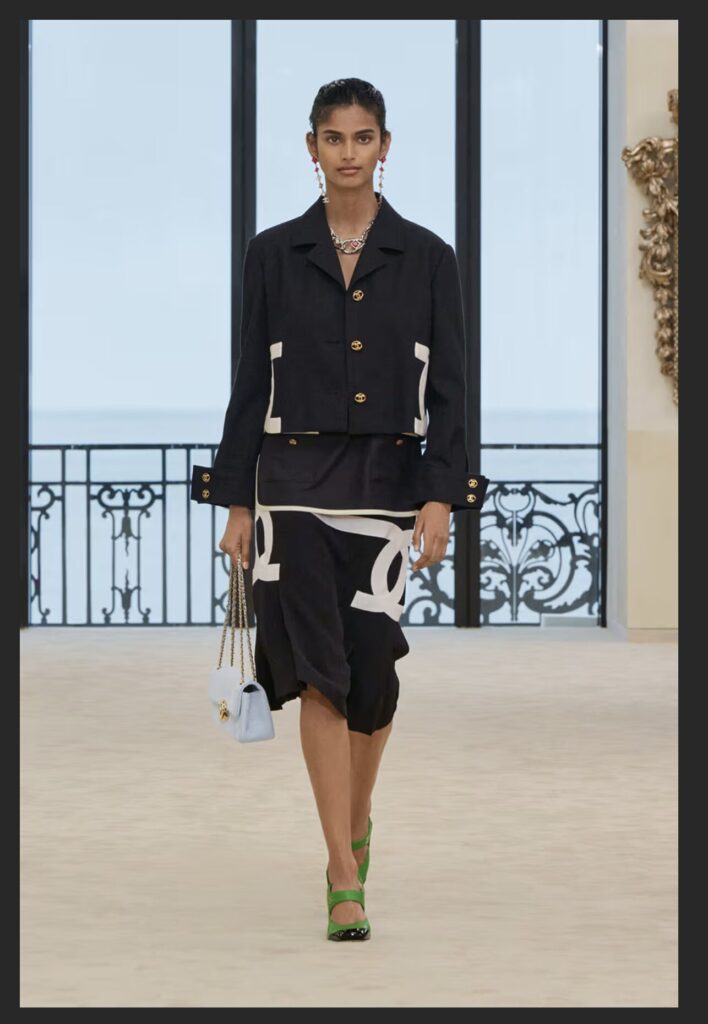
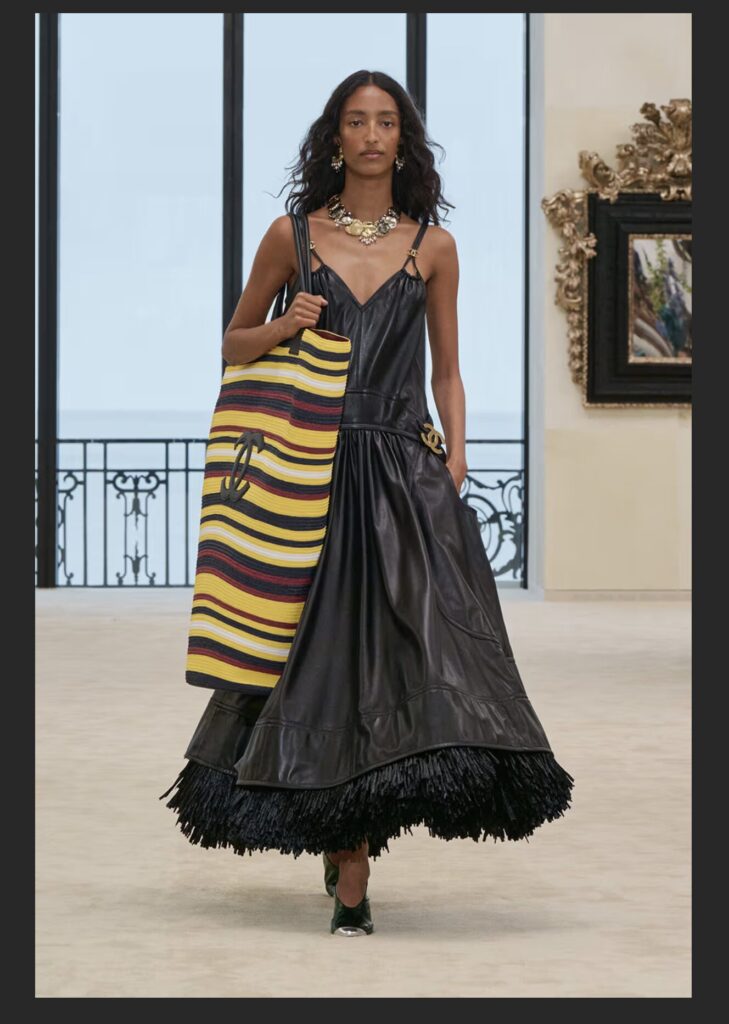
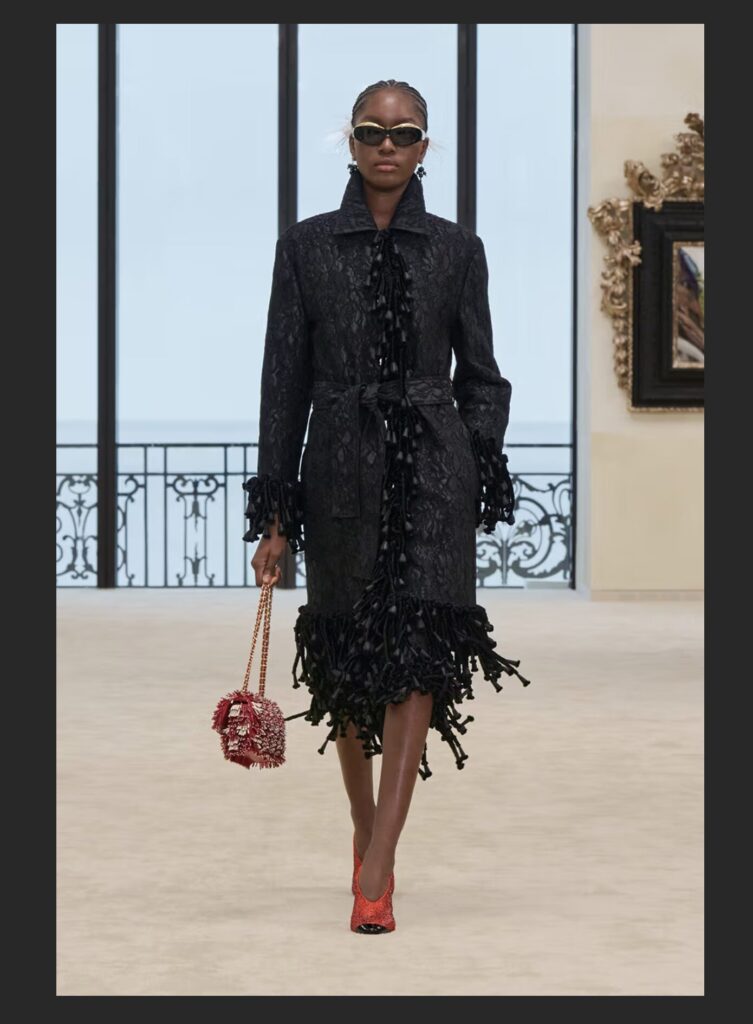
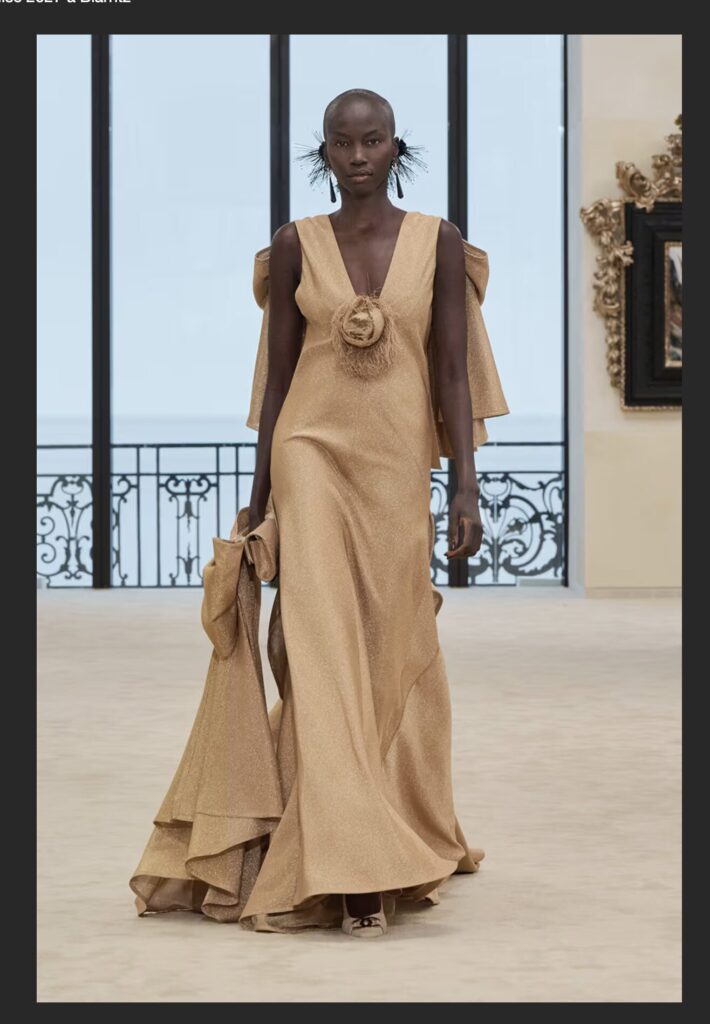
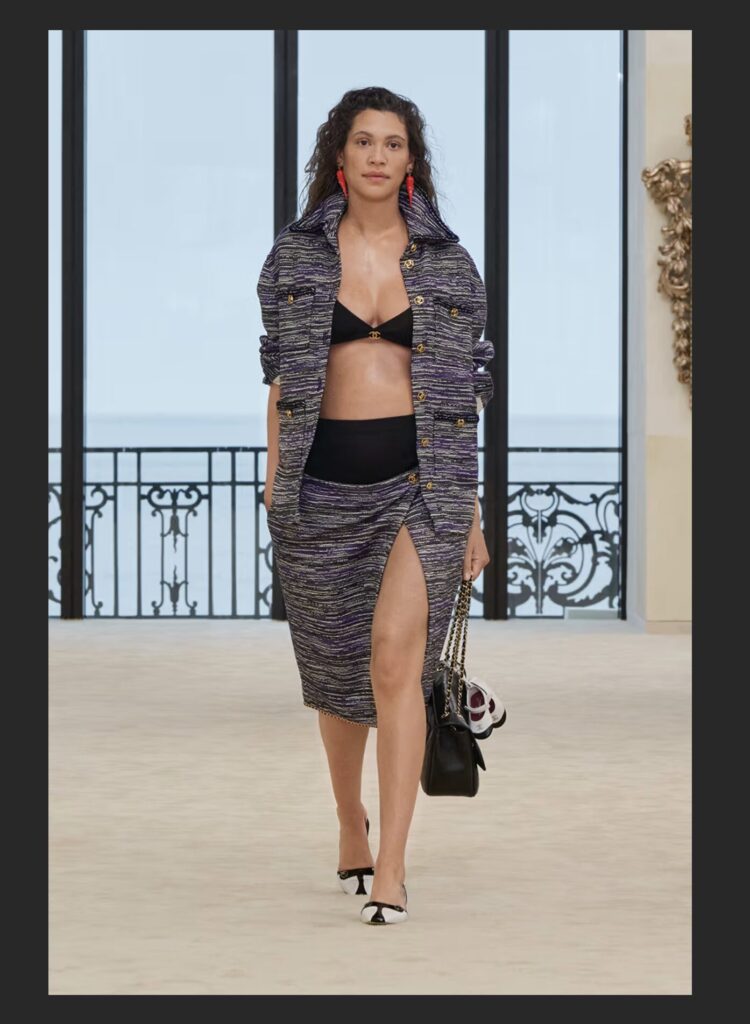
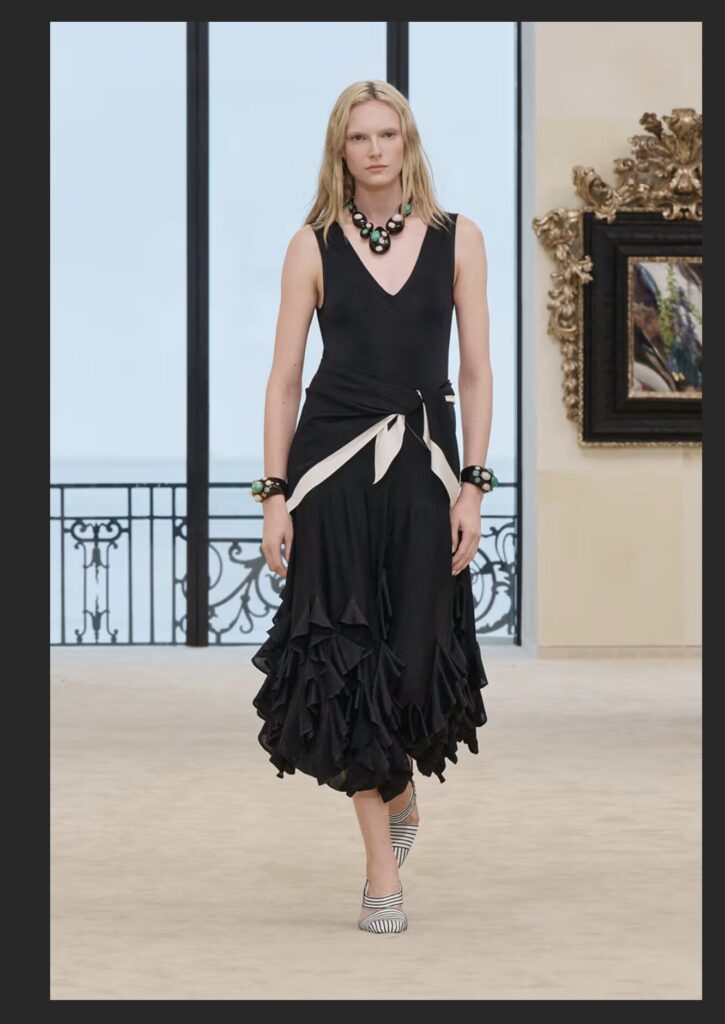
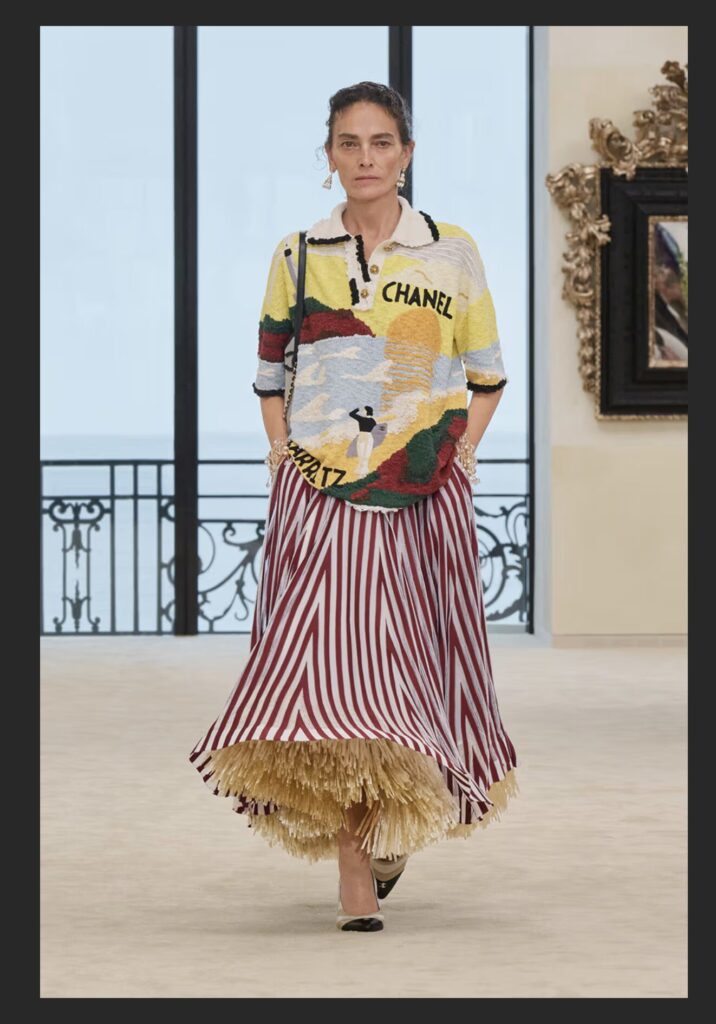
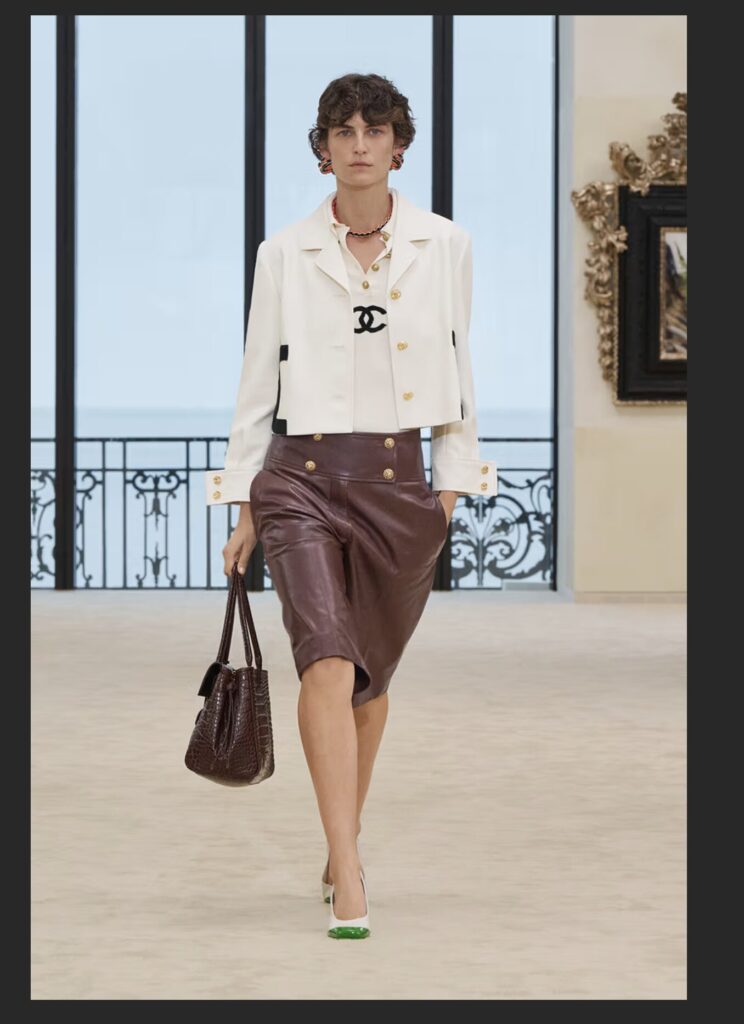
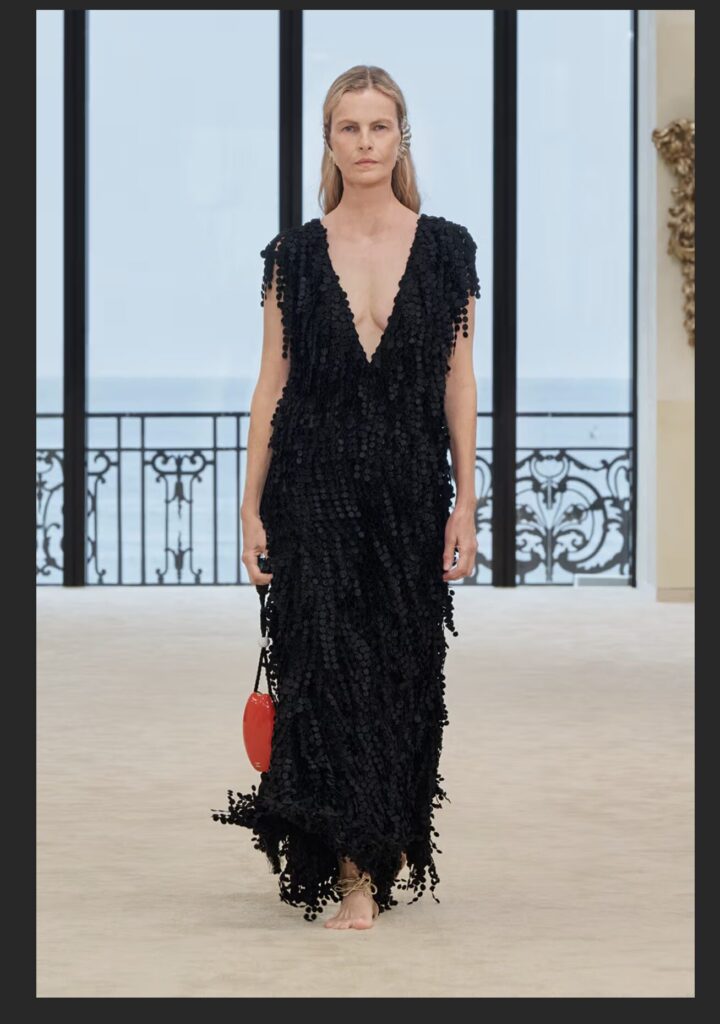
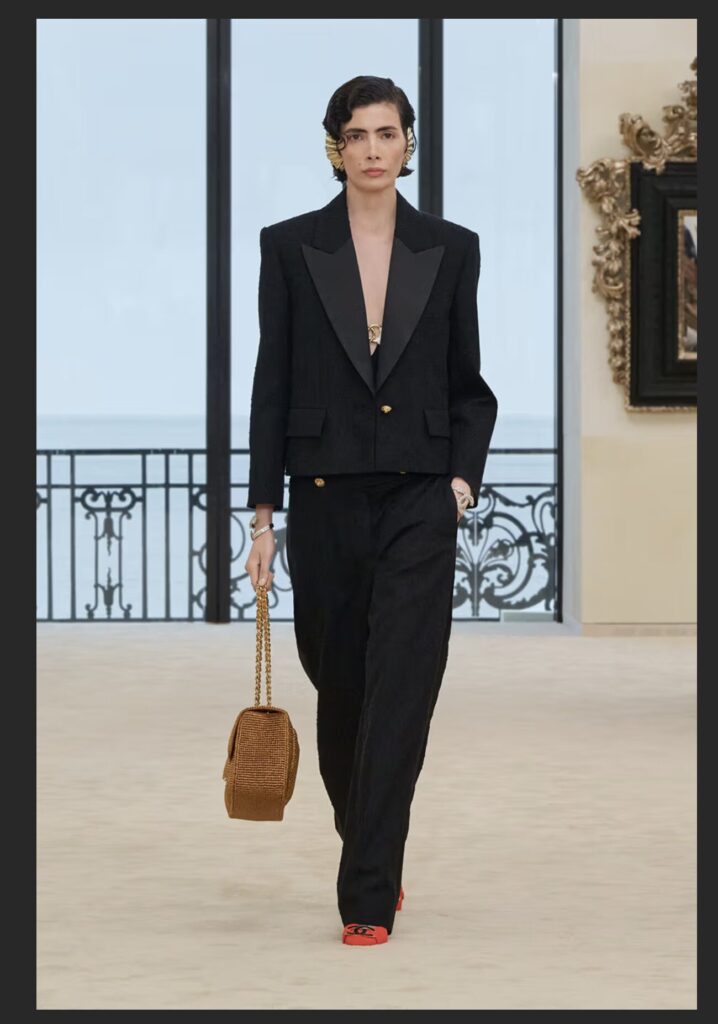
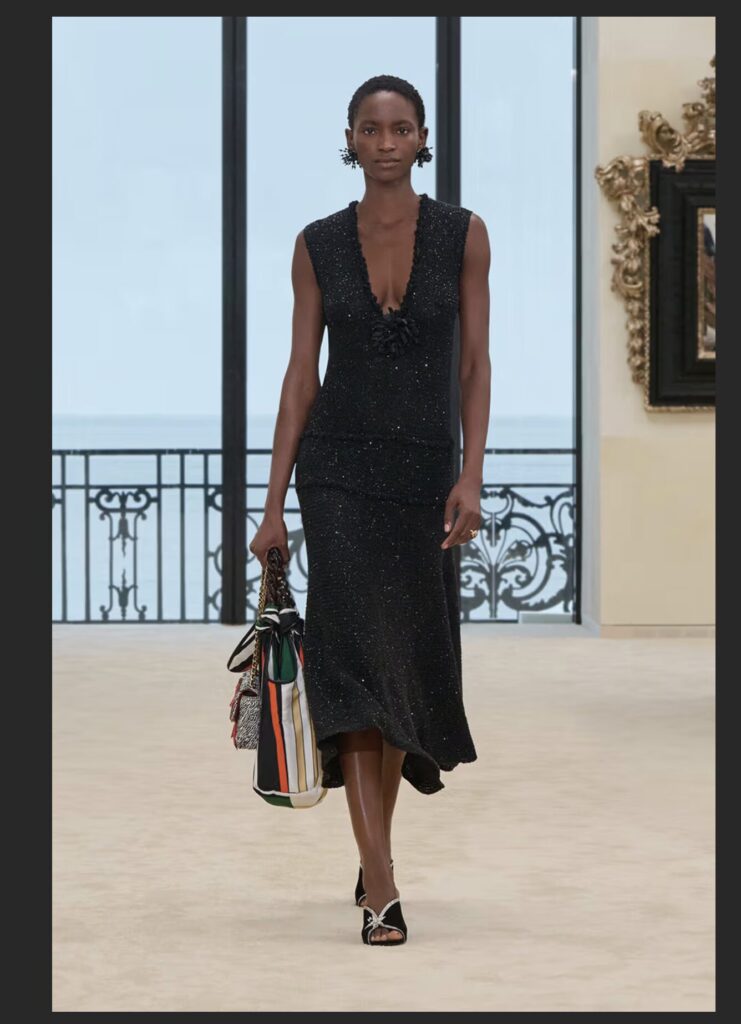
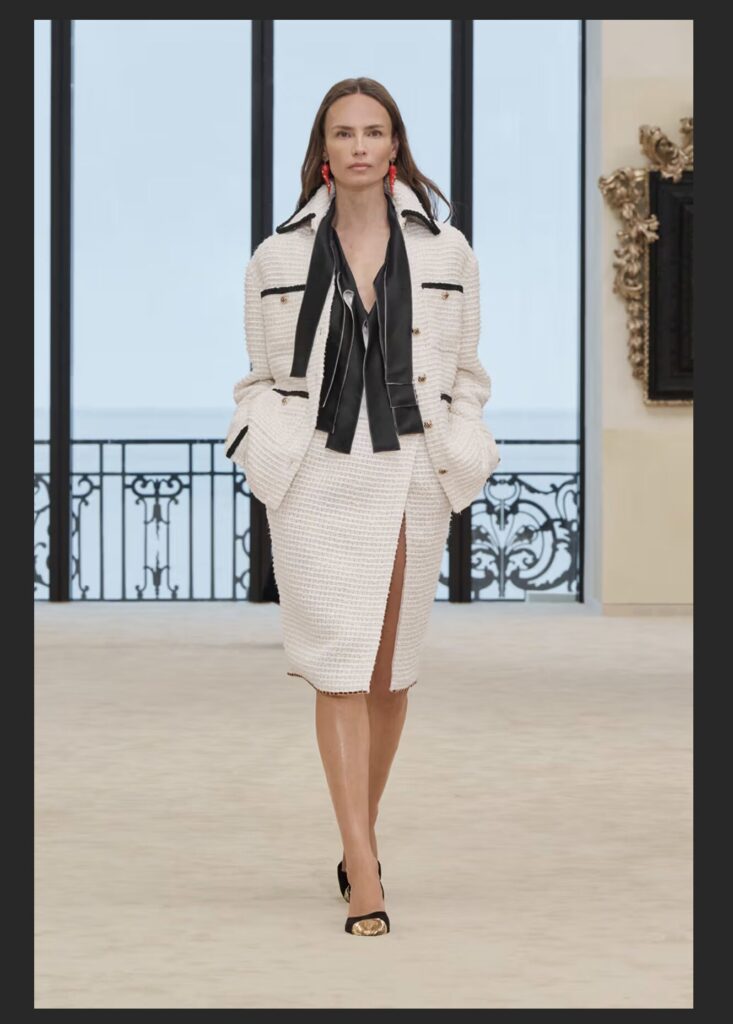
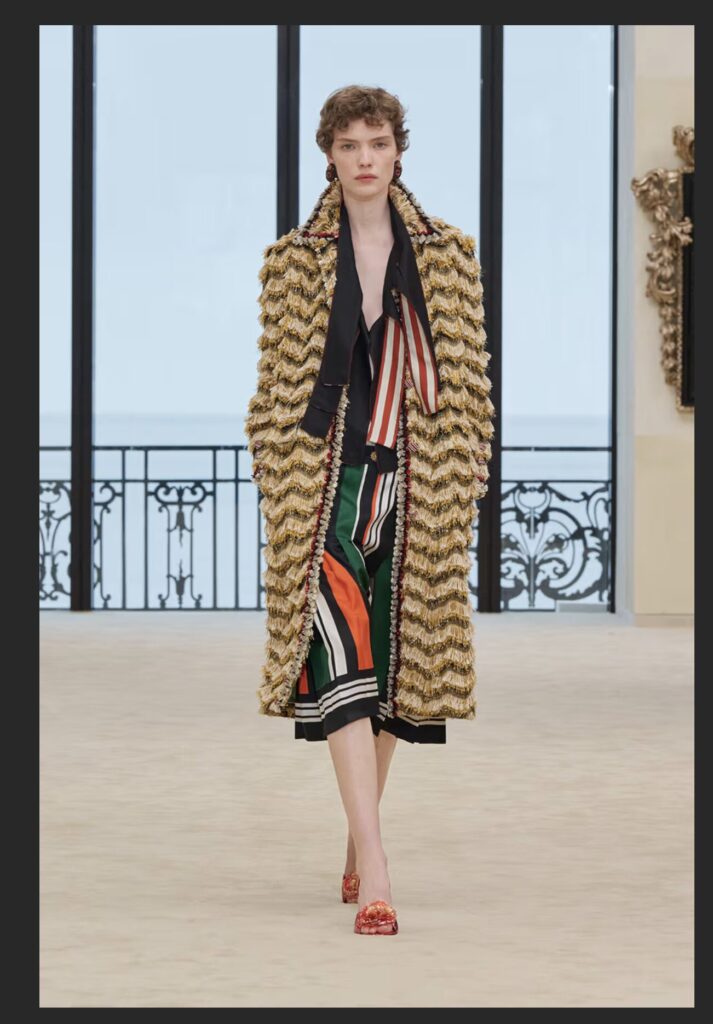
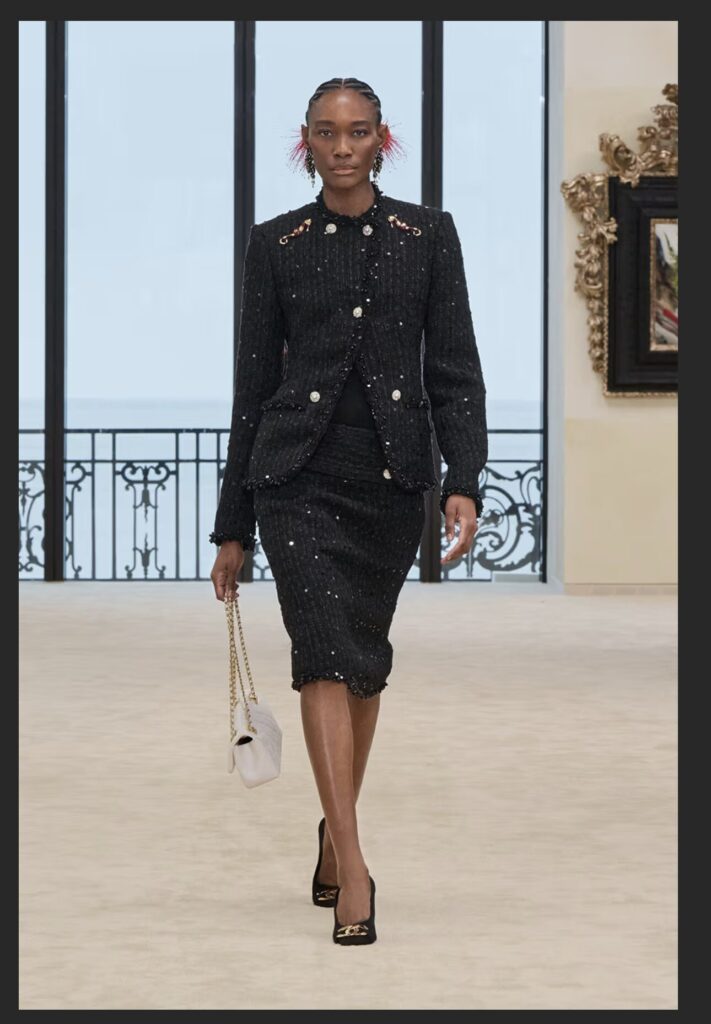
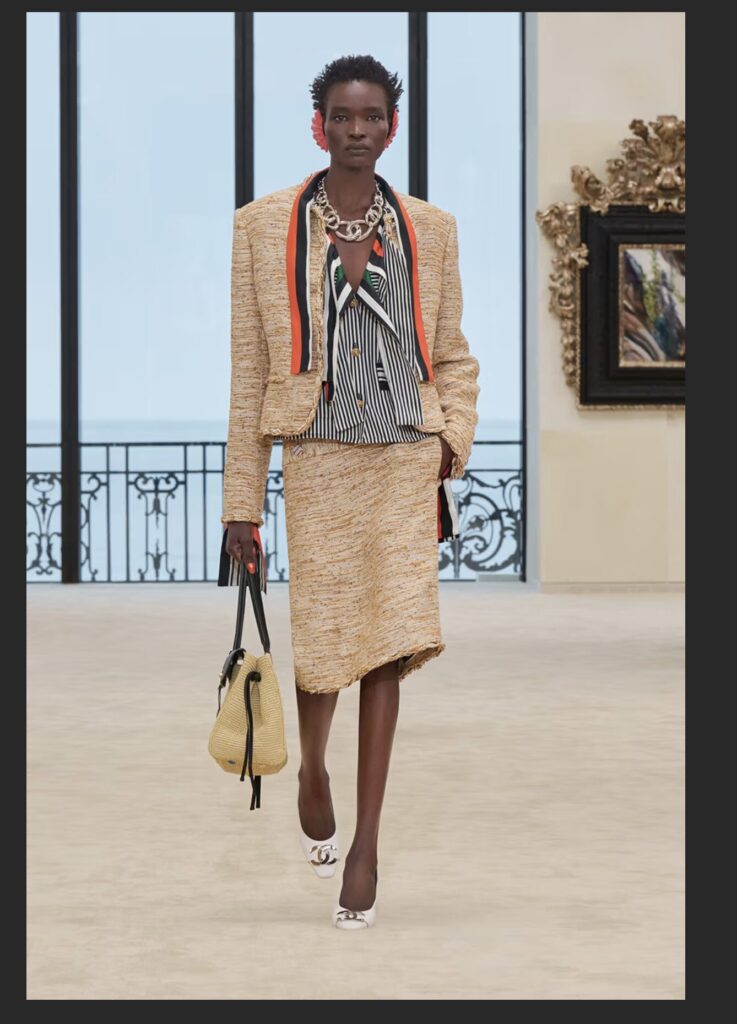
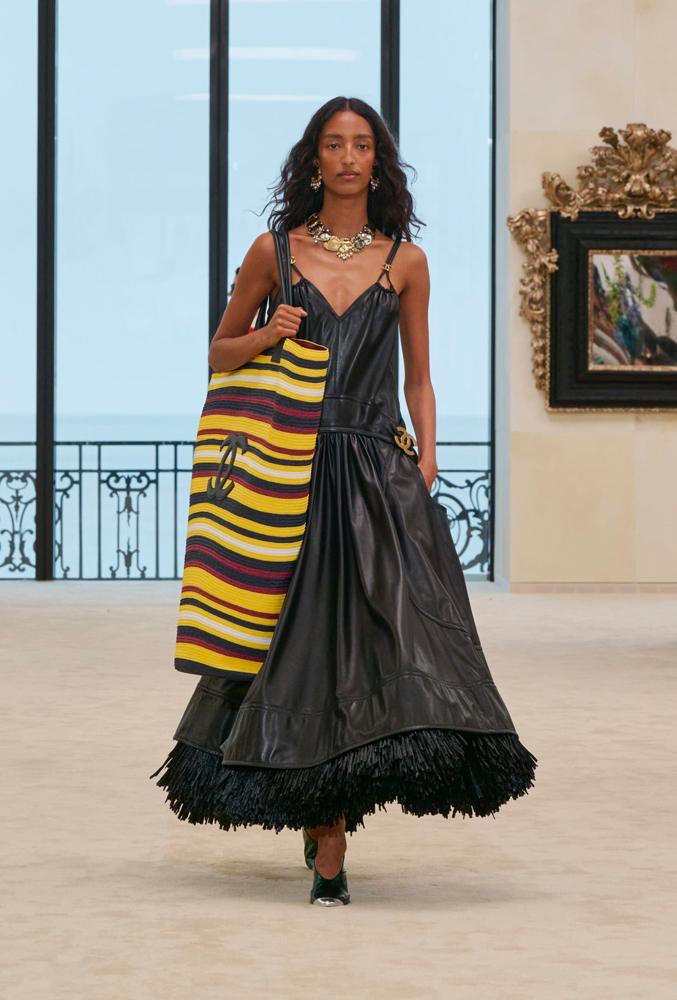
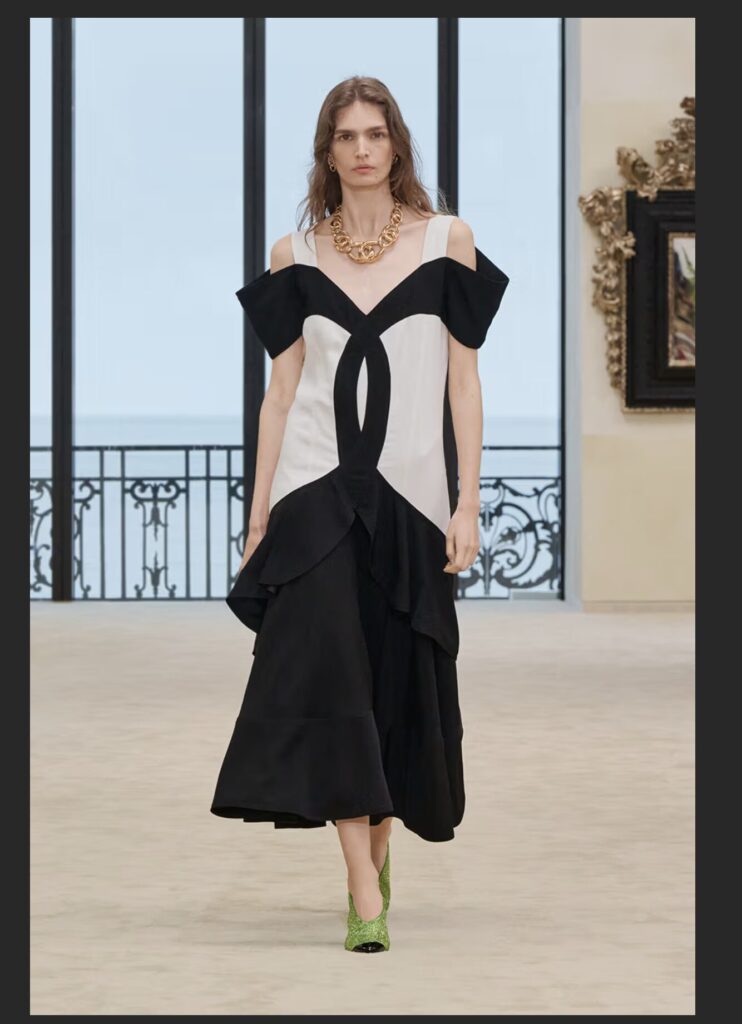
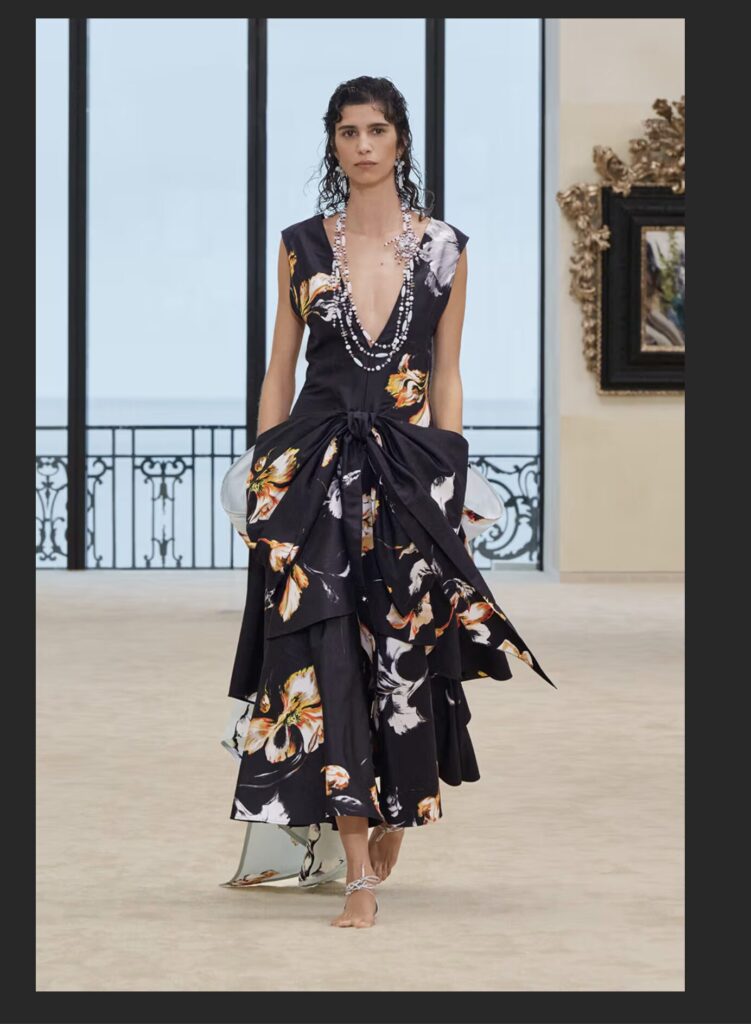
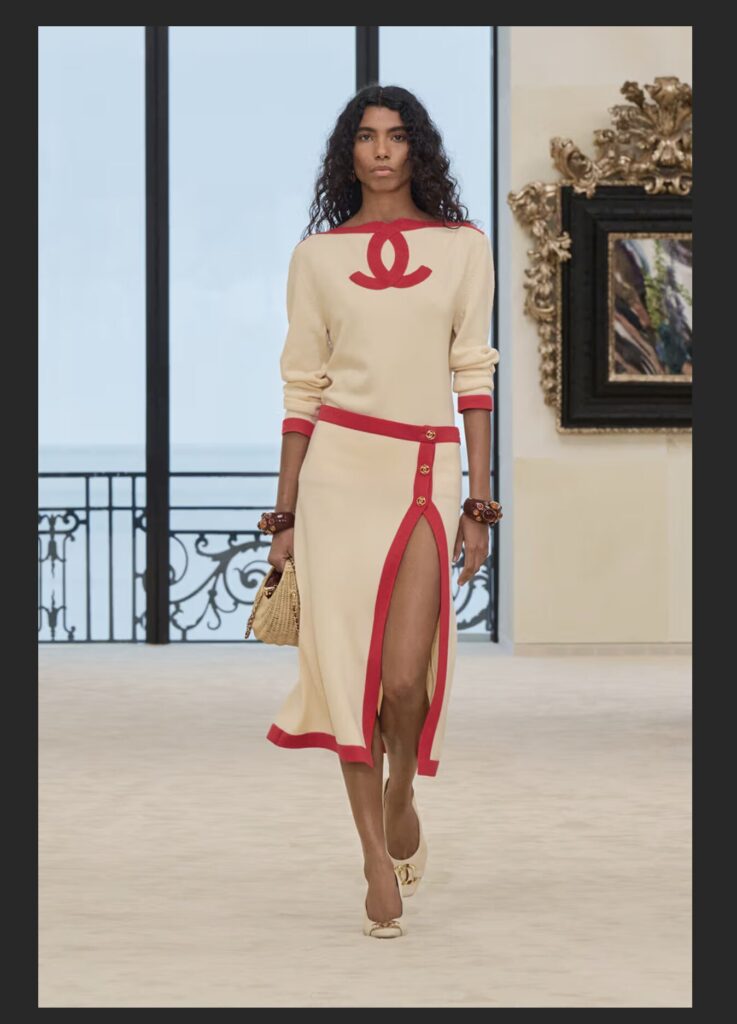
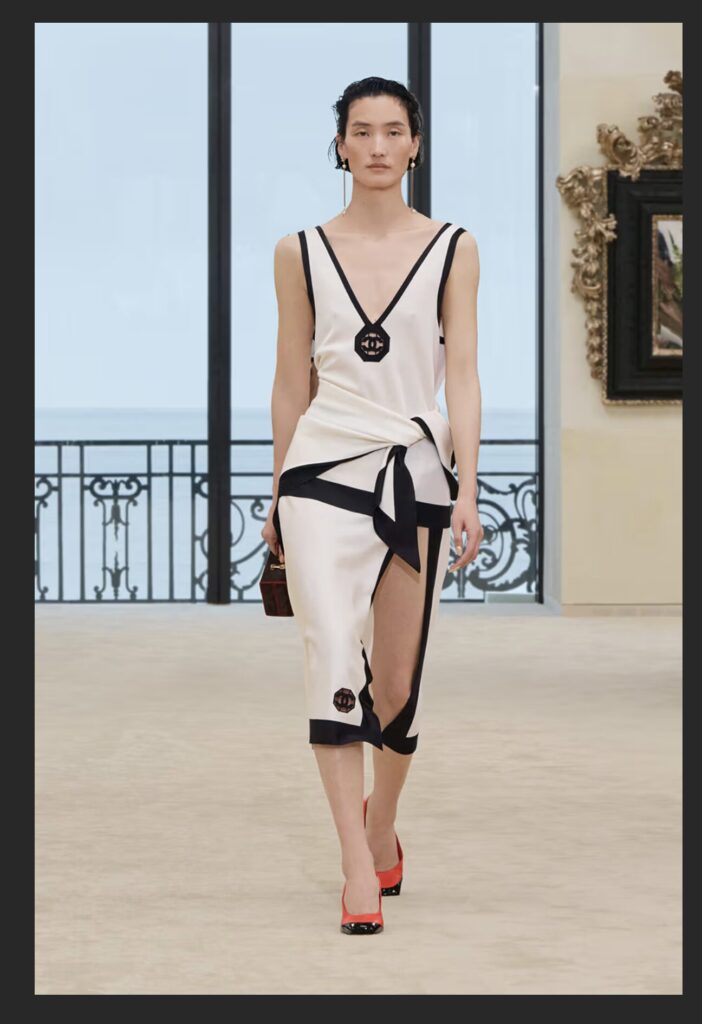
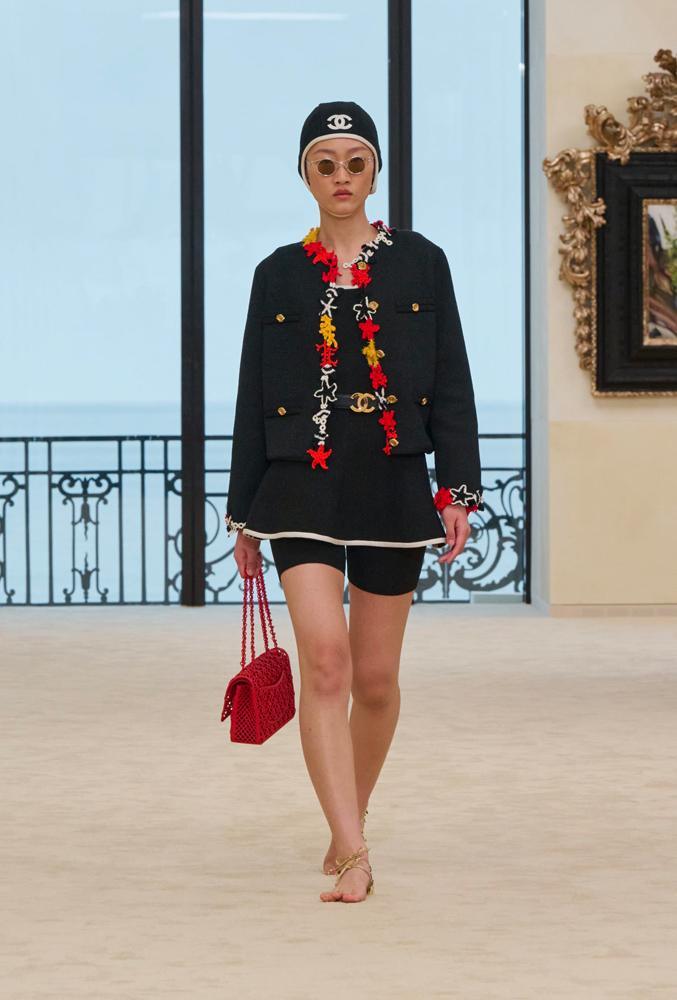
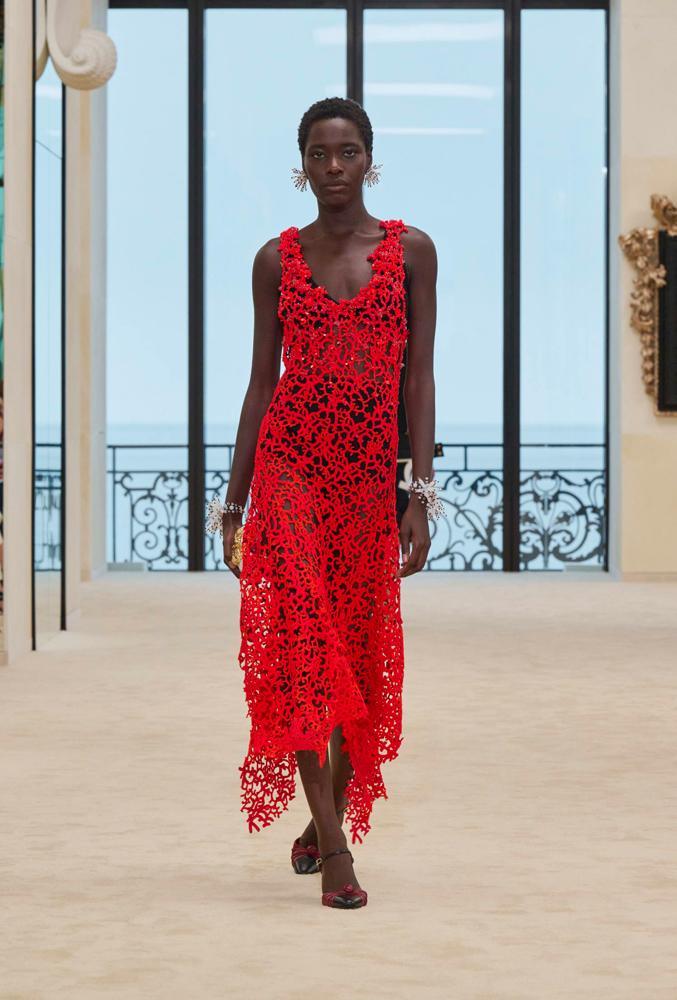
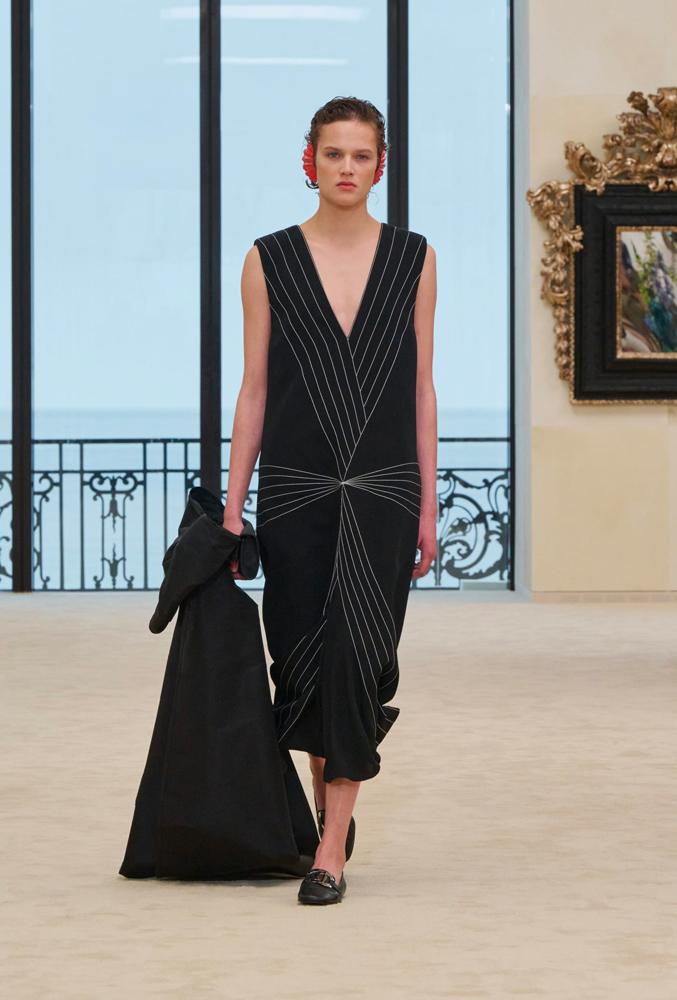
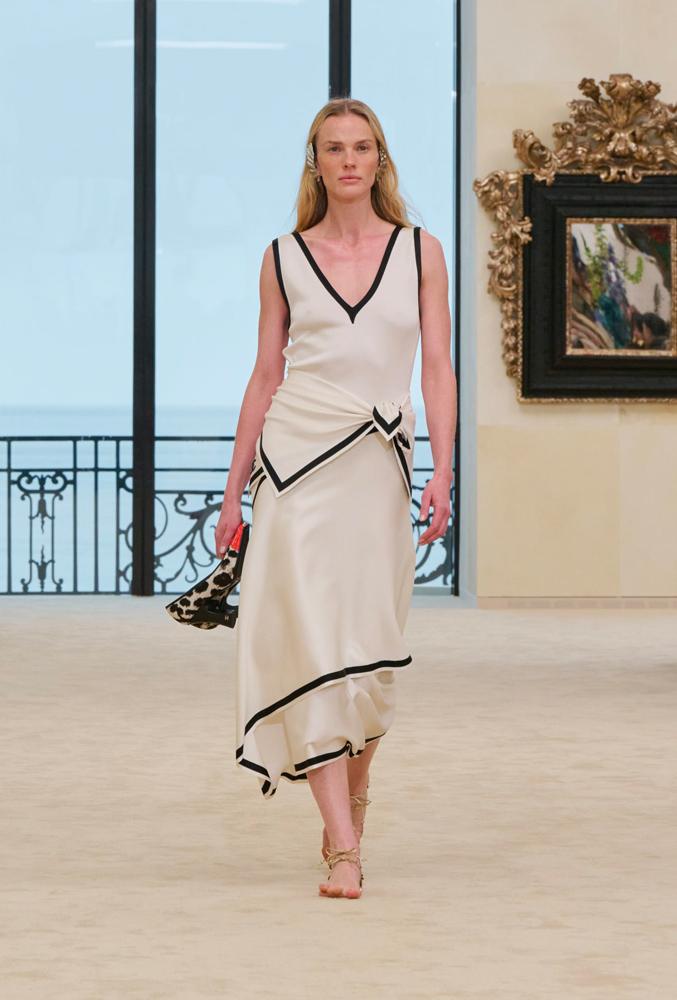
From there — Basque stripes running through the lineup like the Atlantic horizon. French chore coats in washed cotton. Raffia in exaggerated proportions. A coat layered over a newspaper print skirt with fishing net on top. These are not beach clothes that have been elevated into fashion. They are fashion clothes that have been trusted enough to go to the beach. The distinction is everything. One direction produces resort collections that nobody actually wants to wear anywhere. The other produces clothes that make you want to book a flight.
The moment that will be discussed longest is Kaya Wilkins — six months pregnant, walking in a bikini top with a tweed skirt suit, baby shoe charms on the bag. I have built visual worlds for artists and brands for over twenty years and I understand what it means when a single image carries the weight of an entire collection’s thesis. That image said: Blazy’s Chanel has no interest in who you are supposed to be. Only in who you actually are. In a house that has historically been very precise about its idea of the Chanel woman, that is a radical statement made with complete lightness. That is the hardest thing to do.
The finale — mermaid gowns in orange and aquamarine paillettes, models barefoot, hair damp — was theatrical without being desperate. The Charles Aznavour closing track was perfect. The audience stood. They were right to.
A$AP Rocky front row under Blazy’s reign signals something worth watching. The music and fashion worlds moving closer together at Chanel is not an accident. It is a direction. I will be watching that conversation very carefully.
Scores: Vision 9.7 / Execution 9.1 / Originality 8.8 / Cultural fit 9.5
VERDICT: “Approved. He went back to the beginning and found something the house had been trying to say for a hundred years. The woman wearing these clothes is not performing Chanel. She is living in it.”